(888) 227-CASE | 50 West Street. Bloomfield, NJ 07003

The 2025 Tariffs: What It Means for Us

Facing Uncertainty and Challenges
Having necessary medical devices, supplies and equipment are critical for hospitals and clinics to continue delivering high quality care to patients. The healthcare community relies on foreign companies, especially China, for medical equipment and supplies, even raw materials and spare parts to replenish our factories manufacturing products including medical devices right here in the USA. Mr. Trump's proposal to impose a 60% tariff on all products imported from China would disrupt the supply chain for medical devices. Approximately 13.6% of U.S.-marketed medical devices are manufactured in China, and the tariffs will likely affect these products, according to a report recently published by Global Data and referenced in a recent Becker’s Hospital Review.


Tariffs Can Have Consequences for Patient Care
Tariffs are taxes on goods and services imported from another country to raise revenue and to protect domestic industries. They can be placed across the board or more commonly on strategic commodities. While tariffs can be viewed as a good idea to protect certain growing industries, most economists believe that high tariffs reduce economic growth, and some industries will be disproportionately affected. Comprising 10.5% of the average hospital budget, in 2023, medical supplies collectively accounted for $146.9 billion. In 2025, the tariffs on Chinese semiconductor cells, syringes and needles are expected to rise to 50%. Tariffs on batteries, face masks, gloves, and metals such as steel and aluminum are also expected to rise. According to Becker’s Hospital Review the new tariffs are expected to affect approximately 75% of medical devices marketed in the U.S. “Higher prices for high-volume medical supplies are likely to exacerbate and prolong the financial headwinds hospitals already face today.” Companies with heavy reliance on foreign manufacturing are likely to be significantly affected by the tariffs.
Be Prepared for Disruption
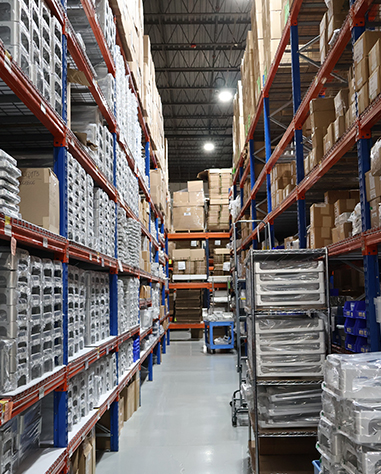
Case Medical, located right here in the USA in Bloomfield, NJ, experienced the supply chain crisis before and the excessive pricing to locate and replenish needed supplies. We face an uncertain future now with pending tariffs beginning day one of the new administration, but we have taken some preventive measures to be better prepared this time. At Case Medical, we locally source our raw materials with blanket orders to ensure our source of supply. This time we increased our stock levels to meet the uncertain future. We remember when tariffs contributed to the supply chain crisis, and we needed to look elsewhere beyond our borders to find materials and supplies when domestic stock dried up. Finding them was one challenge and then paying significantly higher prices for what we could find was another. This time, we increased our production capabilities with more equipment, spare parts and tooling.

Use Locally Sourced Vendors and Planning
Companies with local supply chains can manage challenges easier than those who depend on overseas goods and services. Supply chain management encompasses the planning and management of all activities involved in sourcing and procurement. Case Medical is already locally sourced. Our challenge now is improving our supply chain management with data and duplicate sources of supply as we face new tariffs and new challenges. As a Just-In-Time Manufacturer of reprocessing solutions and sterilization containers, our goal is to boost domestic manufacturing and reduce costs with vertical integration and supply chain management. We collaborate with NJIT for engineering and software development, utilize NJMEP for continuous improvement and education, and started new projects with Rutgers Business School to prepare in advance for any supply chain disruptions. Companies that manufacture products right here in the USA will be less affected as long as we are prepared and understand your needs. This might be a good time to consider joining Case Medical’s AutoBuy Procurement Program developed during the last supply chain crisis to be prepared for the next.
We Were Featured On PBS To Discuss The Tariffs
Our CEO, Marcia Frieze, was asked by PBS to comment on the proposed tariffs.
Connect with Case Medical on social media for more content!
LinkedIn
FaceBook
Visit us anytime at www.casemed.com to learn more about our products and services. We are here to help. Case Medical is a U.S. EPA SAFER CHOICE Partner or the Year for Manufacturer Formulator and recognized in NJ as Innovative Manufacturer of the Year.
Kindest Regards,