
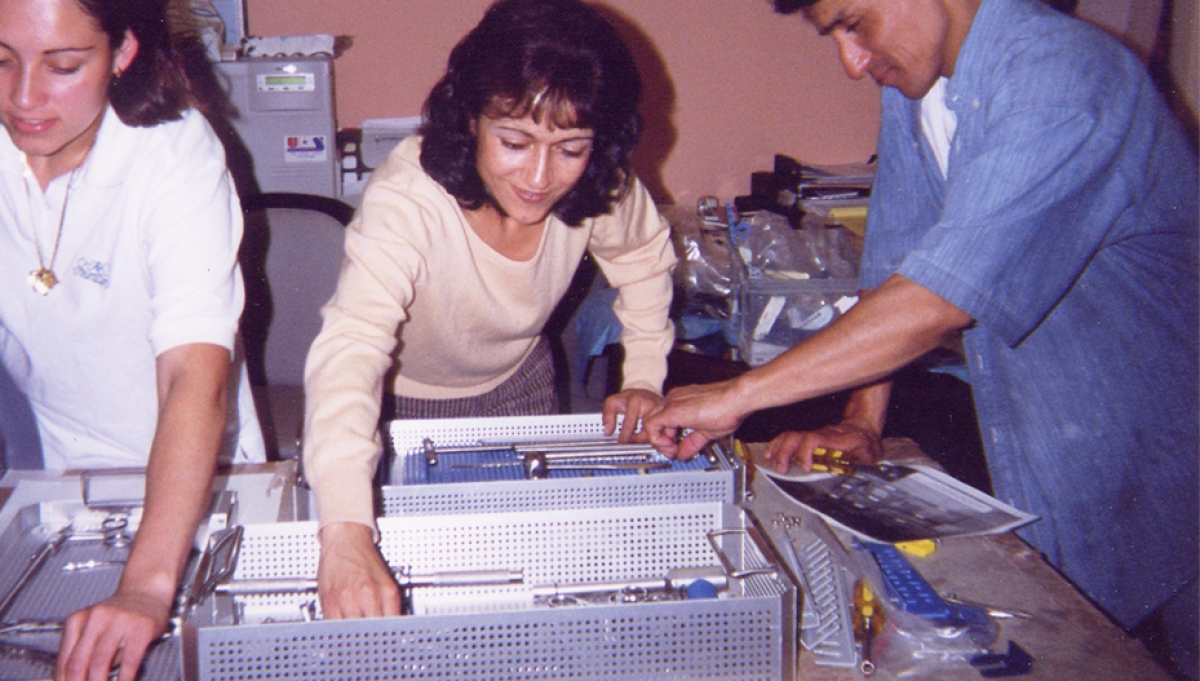
In healthcare, a procedure tray is more than a place to hold instruments. It is part of the workflow that connects sterile processing, the O.R., supply chain, and patient care.
The Hidden Cost of Overloaded Trays
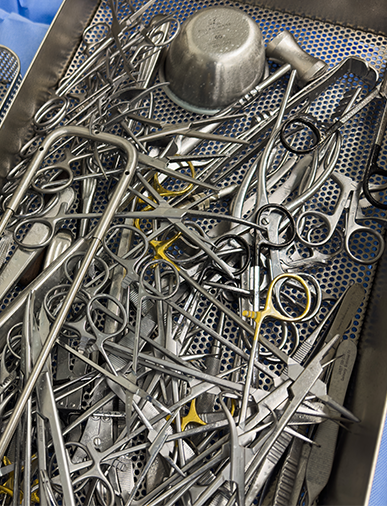
When trays are overloaded or poorly configured, every extra instrument must still be cleaned, inspected, assembled, sterilized, transported, and stored. That adds labor, weight, complexity, and cost. It can also increase the risk of missing instruments, delayed setup, rework, and unnecessary variation across departments or facilities.
The challenge becomes even greater when staff must rely on paper documentation, adhesive labels, or hard-to-access instructions to assemble and reprocess complex devices such as endoscopes, robotic instruments, and specialty trays. When information is separated from the tray, teams lose time searching for instructions, confirming configurations, or verifying the correct assembly sequence.

Start with What the Procedure Really Requires
Building the right tray starts with one practical question: what does this procedure actually need? Customized procedure trays help healthcare facilities move away from oversized, one-size-fits-all sets and toward configurations that reflect actual clinical use. The goal is not to remove instruments clinicians need. The goal is to organize the right instruments in a safer, simpler, and more repeatable way.
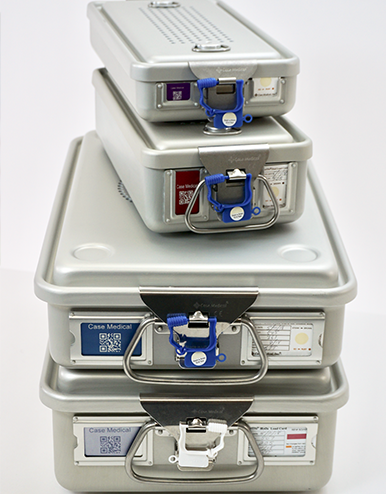
Case Medical has created a modular custom tray system designed to work within a universally compatible SteriTite® container platform. This approach allows facilities to build trays around procedure-specific needs while supporting protection, organization, sterilization, storage, and transport in a reusable rigid container system. A smarter tray strategy can support cleaning, inspection, sterilization, storage, transport, point-of-use readiness, and physician satisfaction.
Standardize Without Sacrificing Physician Preference
Tray standardization can reduce variation, but it should still respect physician preference. One effective approach is to create a standardized core tray for the procedure and pair it with a smaller physician-specific set when needed. This helps facilities improve consistency across teams or sites while preserving the flexibility clinicians expect. It also supports tray readiness, procedural consistency, and less burden on O.R., SPD, and perioperative teams.
Digital visualization strengthens this process by making tray contents, layouts, and assembly requirements easier to see, share, and repeat. Instead of relying only on binders, paper IFUs, or adhesive labels that may be outdated, damaged, or missing, staff can access paperless IFUs and visual instructions connected directly to the tray and its contents.
Make Instructions Accessible at Point of Use
As trays become more specialized, access to accurate instructions becomes essential. Complex devices often require specific reprocessing steps, orientation, placement, and assembly sequences. If those instructions are not readily available, the risk of delays, rework, and inconsistency increases.
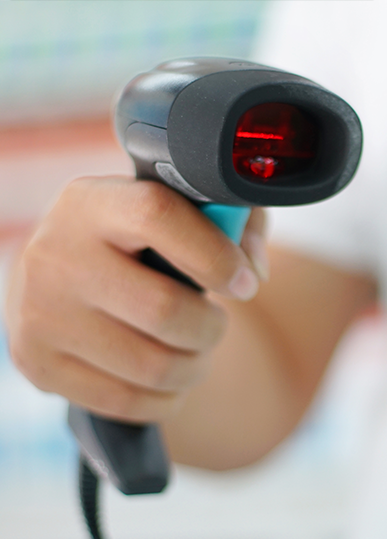
Case Medical addresses this challenge by incorporating digital visualization and scannable instructions directly into the tray system. Instructions can be accessed in three practical ways: barcode scanning, custom graphics, and miniaturized ID tags with sequential assembly steps. These tools help provide reprocessing and assembly guidance for the contents of the tray at the point of use.
By bringing instructions closer to the instruments, facilities can reduce dependence on paper documentation, improve consistency for complex sets, support staff training, and make assembly more intuitive for SPD and O.R. teams.
Consider Packaging, Protection, and the Total Cost of Ownership
Tray design, instructions, and packaging go hand in hand. If a tray is too heavy, too complex, dependent on disposable wrap, or missing critical assembly information, the surgical schedule may be affected.
Uniquely, SteriTite® is universally compatible with current sterilization modalities and with devices that can be sterilized. This versatility helps facilities reduce duplicate inventory, avoid errors in container selection, and standardize across departments. As a reusable rigid container, SteriTite® can also help reduce reliance on disposable wrap while improving instrument protection, organization, and workflow consistency. It is especially useful for high-priority sets such as loaner trays, high-turn trays, orthopedic sets, endoscopes, robotic instruments, and trays with recurring setup issues.
For supply chain and value analysis teams, this is also a total cost of ownership decision. The true cost of a tray includes labor, duplicate inventory, reprocessing time, replacement costs, waste, delays, disposable wrap, paper documentation, labeling, and staff burden—not just the purchase price.
Case Medical helps healthcare facilities reduce complexity, protect valuable instruments, improve workflow consistency, and lower total cost of ownership. Contact Case Medical today to build a smarter tray strategy for safer, more efficient care.