
Doing Business in a Sustainable and Non-Toxic Way
Everyday seems to bring a new natural disaster or calamity, wildfires burning up New Mexico, western reservoirs drained to their lowest levels ever, extreme weather, flooding and landslides around the globe, can it get any worse? In a word, YES, yes it can if we don’t also stop poisoning ourselves with chemicals and products toxic to both humans and the environment.
Pandemic, climate change, water shortages and now…
Increasingly, fresh water is becoming harder and harder to come by, especially in America’s Southwest. And what are folks in healthcare and industry doing to alleviate the problem?
A new 510k… And a behind the scenes peek at Case Medical
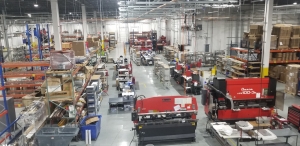
Case Medical is a vertically integrated manufacturer serving the healthcare community. Manufacturing products for instrument processing and infection prevention requires equipment, skilled professionals, access to raw materials, quality control and meeting stringent regulatory requirements. With so many different players and parts in the process, how can you be sure that your specific needs are met? One way is to be vertically integrated. Another is to have universal compatibility…
Women in healthcare…
Healthcare has long been a path toward advancement for women—from the 1950s when Virginia Apgar, developed a standard to assess newborn health, to Tu Youyou’s Nobel Prize in medicine in 2015 for her discovery of a treatment for malaria. Women account for more than half of all entry-level employees in healthcare and have made great strides in advancing to management. And Case Medical as a woman owned and run medical device manufacturer counts itself part of the advancement of women in healthcare.
At Case Medical, Every Day Is Earth Day

Happy Earth Day! Your yearly reminder to respect the earth and show gratitude for our planet. The earth offers us so many beautiful places and important resources that need to be protected.
Case Solutions to the Rescue
Spring Cleaning is a good thing at home and in the SPD. “Nothing feels quite as satisfying as coming home to a house that's so clean it practically sparkles.” And isn’t the same true for our workplaces and certainly for healthcare facilities? Springtime is here, throw open the windows, let in the sunshine and fresh air. Spring is a time for renewal after all. We here at Case Medical offer this checklist to help
Something’s Coming
This week we continue with Covid19 by looking at its effects around the world. Covid19 has become the great mystery of our times. Why for instance here in the Northeast, home of Case Medical, are we seeing a rise in cases? It’s uncertain if it’s the beginning of a larger surge. William Hanage, an epidemiologist at Harvard, said “There’s definitely something coming, but depending on all the moving parts it might be a ripple relative to previous waves.”
Coping with a Wily and Agile Virus
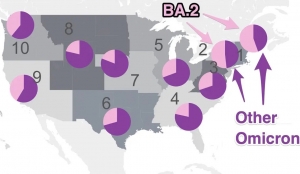
Uncertainty is the thing that will keep you up at night. Parents know it well as they wait up for the kid who’s out past their promised return time. Farmers uncertain about the weather lose sleep over will there be too much rain or not enough. Consider your own uncertainty as you try to plan for your facility against a backdrop of pandemic, unexpected events, and a war in Europe.
What’s Behind the Conservation of Energy

Does the idea of the conservation of energy make you think of the gas mileage your car gets, or putting on a sweater when you lower the heat in the house during winter, or maybe 60 watt LED light bulbs that make you think you’re going blind?
The Natural Order of Things or Why Enzymes are our Allies
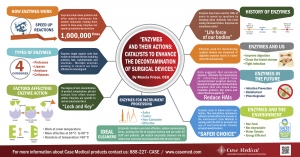
Does your idea of natural order mean be able to nap on a quiet Sunday afternoon, or binge watch a new comedy series that just dropped? Well, those activities certainly do fall into the natural order things for time off from work, but that’s not where this blog is going. Instead let’s talk about chaos, disorder, perfect example, the mess that greets you Monday morning in the SPD.